Upgrade export production machinery at zero or concessional customs duty under EPCG — how the export obligation works and 2026's automatic deadline extension.
If your export business is outgrowing your current machinery, the EPCG scheme is the main route Indian manufacturers and service exporters use to upgrade equipment without paying full customs duty upfront.
What EPCG Does
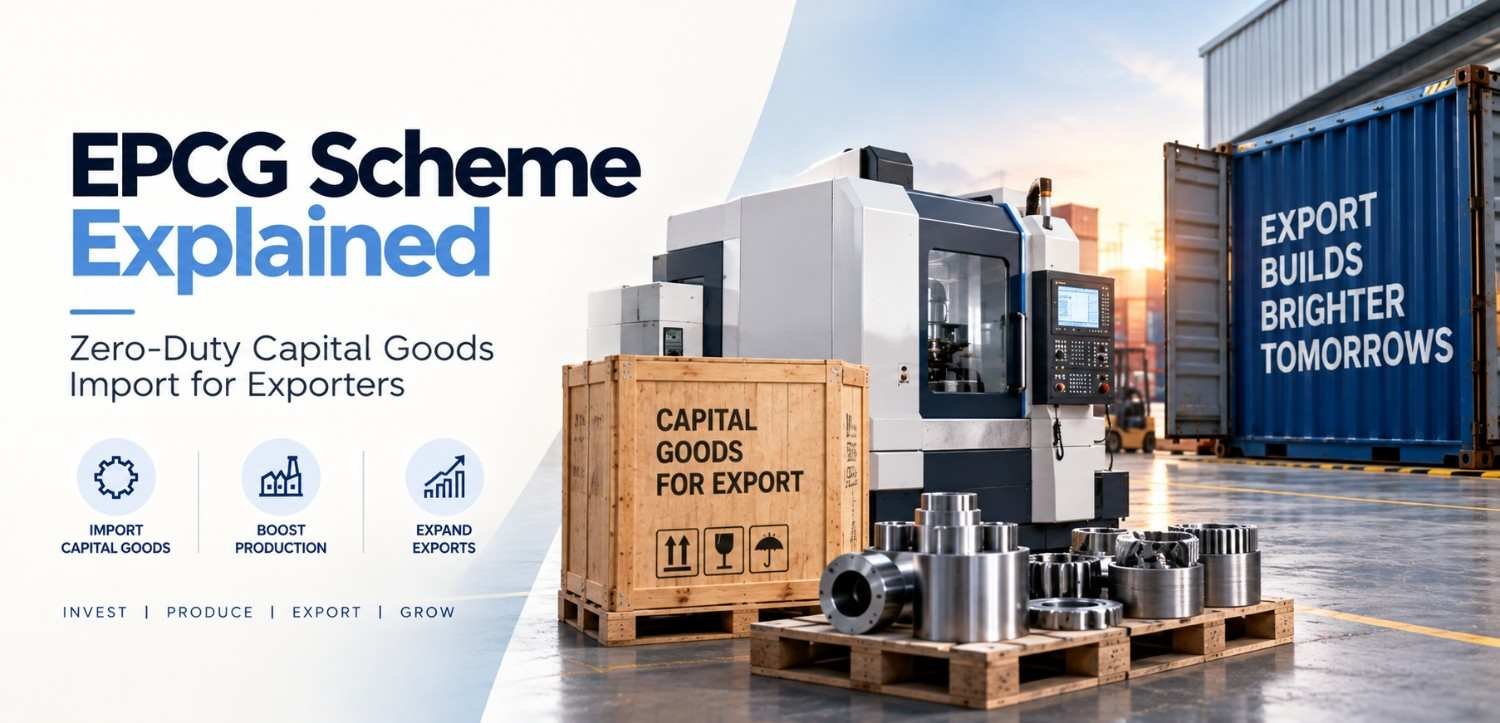
EPCG stands for Export Promotion Capital Goods. It lets manufacturers, service providers, and merchant exporters tied to a supporting manufacturer import capital goods — machinery, tools, spares, jigs and fixtures — at zero or concessional customs duty. It's governed by Chapter 5 of the Foreign Trade Policy 2023–2028.
In exchange for the duty saved, you take on an export obligation: you must export goods worth six times the duty you saved, within six years of getting the authorisation. That obligation is split into two blocks — at least 50% must be fulfilled in years 1–4, and the remaining 50% in years 5–6.
Who It's For
- Businesses with a valid Import Export Code (IEC) and a genuine export production plan
- Exporters with consistent export history and significant upcoming capital investment needs benefit most, since the duty savings scale with equipment value
- Both new and second-hand capital goods can be imported under EPCG in general — though note that under the standard zero-duty route, only brand-new capital goods are permitted; second-hand import provisions have separate, stricter conditions, so check current DGFT guidance for your specific case
2026 Compliance Relief — Worth Knowing
Amid 2026 geopolitical disruptions to global shipping routes, DGFT issued Public Notice No. 51/2025-26 (6 March 2026) granting an automatic extension of the Export Obligation period to 31 August 2026 for any Advance Authorisation or EPCG authorisation whose EO deadline was falling between 1 March and 31 May 2026. No application or composition fee is needed for this specific extension — it applies automatically, though it's worth logging into the DGFT portal to confirm your authorisation reflects the updated deadline.
What Happens If You Miss the Obligation
If the export obligation isn't met within the stipulated period, you become liable to pay back the customs duty you saved, plus interest, to customs authorities. This is why realistic export obligation planning — not just the duty saving — should drive the decision to use EPCG for a given piece of equipment.
This article is for general information only and is not a substitute for advice from your customs broker or CA. Confirm current EO deadlines, composition fee rules and second-hand goods provisions on the DGFT portal before applying.