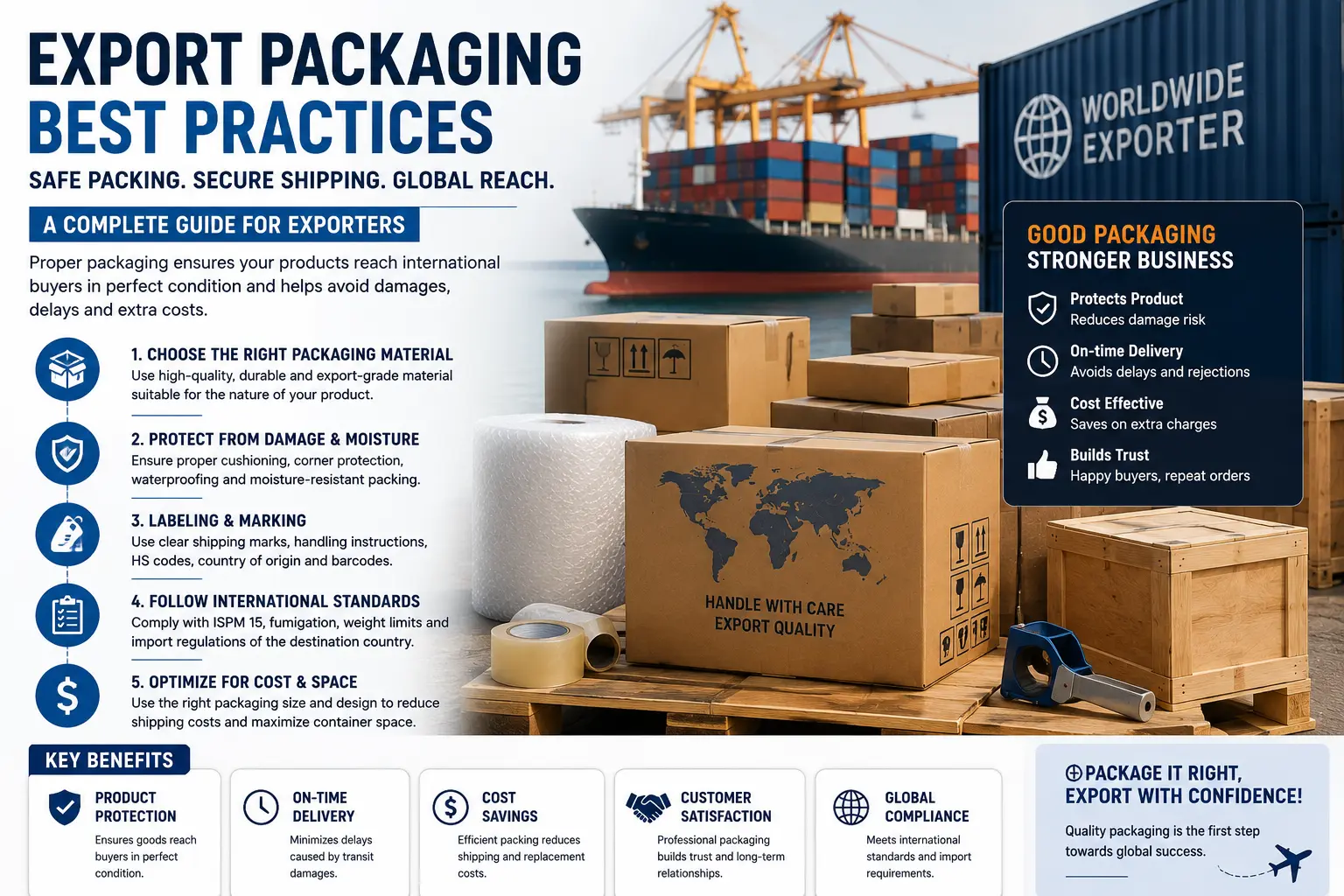
Good export packaging protects products during international transport, improves presentation and reduces the possibility of damage or claims.
Why Export Packaging Is Important
Products may pass through warehouses, ports, containers, trucks and multiple handling points before reaching the buyer. Export packaging must protect goods from impact, moisture, vibration, stacking pressure and environmental conditions.
Understand the Product
Packaging should be selected according to product weight, dimensions, fragility, value, shelf life and sensitivity to moisture or temperature.
Use Strong Outer Packaging
Depending on the product, exporters may use corrugated boxes, wooden crates, pallets, drums, bags or specialised containers. The outer packaging should support the total weight and expected handling conditions.
Protect the Product Internally
Use appropriate cushioning, dividers, moisture protection, wrapping and movement control. Products should not shift freely inside the package.
Provide Clear Identification
Use required shipping marks, handling symbols and package numbers. Avoid adding unnecessary or misleading information. Ensure labels remain visible and secure throughout transport.
Optimise Size and Weight
Efficient packaging can reduce freight cost and improve container utilisation. However, cost savings should never compromise product safety.
Confirm Destination Requirements
Some destinations or product categories may have specific packaging, material treatment, labelling or environmental requirements. Verify these before dispatch.
Inspect Before Shipment
Check sealing, strength, labels, quantity, pallet stability and visible damage before handing goods to the logistics provider.