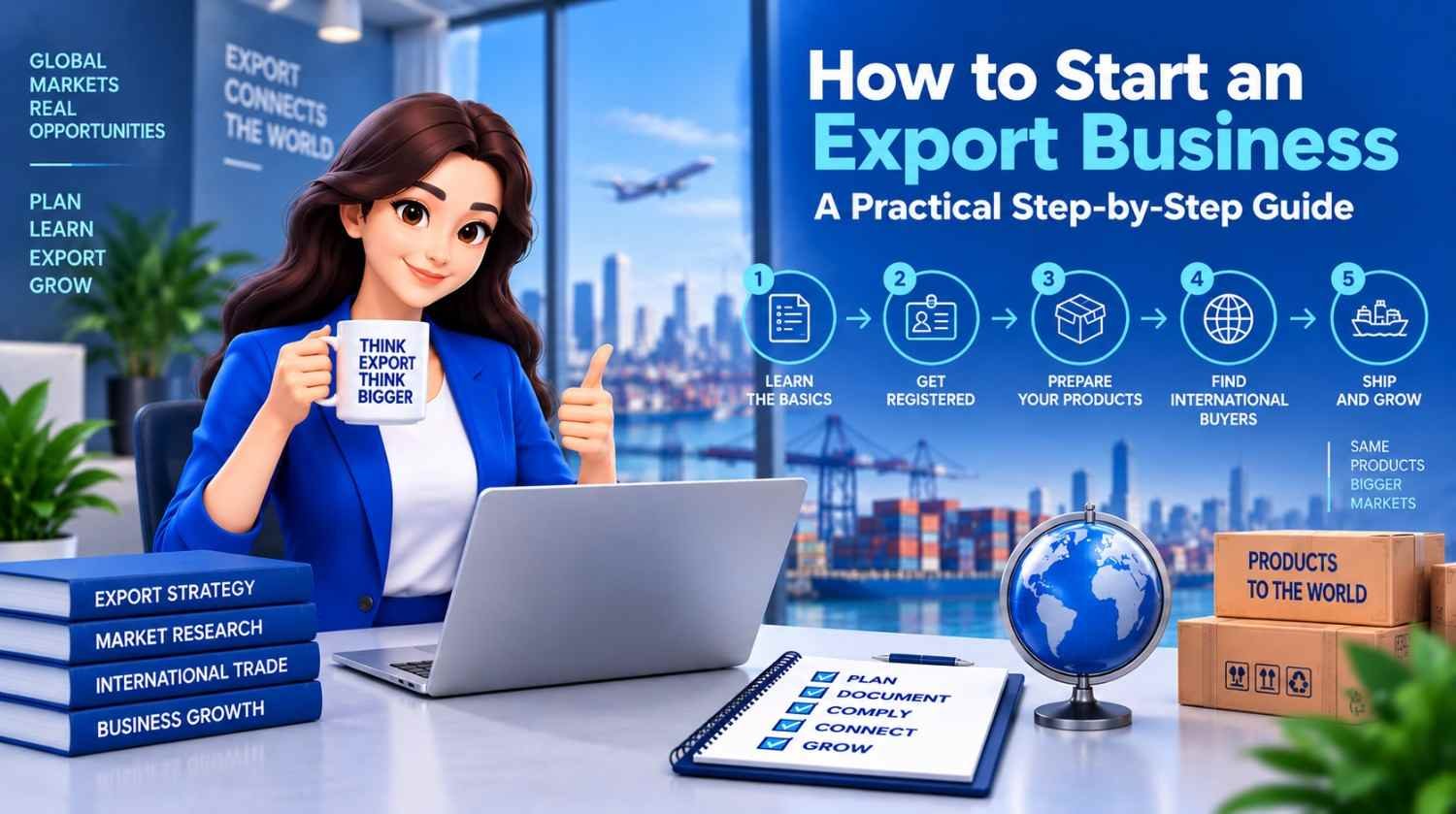
Learn how to select products, identify buyers, prepare export documents, choose logistics partners and build a reliable international export business.
Introduction
Starting an export business can help manufacturers, suppliers and traders reach new markets, diversify revenue and build long-term international relationships. A successful export journey begins with careful planning, reliable documentation and a clear understanding of the target market.
1. Select the Right Product
Choose a product with consistent demand, reliable supply and suitable margins. Consider product quality, packaging requirements, shelf life, shipping cost, compliance requirements and competition in the target country.
It is better to begin with a focused product range rather than trying to export too many unrelated items at once.
2. Research the Target Market
Study where your product is needed and which countries offer realistic opportunities. Review buyer preferences, pricing levels, import restrictions, duties, certifications, local competition and distribution channels.
Market research reduces risk and helps you prepare the right offer for the right buyer.
3. Prepare Your Business and Export Documents
Keep your business registration, tax details, bank information, product specifications, quotations, invoices and shipping documents properly organised. Depending on the product and destination, additional certificates or licences may be required.
Always verify the latest documentation requirements with the relevant authority, customs professional or logistics expert before shipment.
4. Create a Professional Product Presentation
International buyers expect clear and complete information. Prepare:
- High-quality product images
- Detailed specifications
- Minimum order quantity
- Packaging information
- Production capacity
- Delivery timelines
- Payment terms
- Available certifications
5. Find Genuine International Buyers
Use B2B marketplaces, business directories, trade exhibitions, industry associations, professional networks and direct outreach to connect with potential buyers.
Your company profile should be complete, transparent and easy to verify. Buyers are more likely to respond when they can quickly understand your products, capacity and business background.
6. Send a Clear Export Quotation
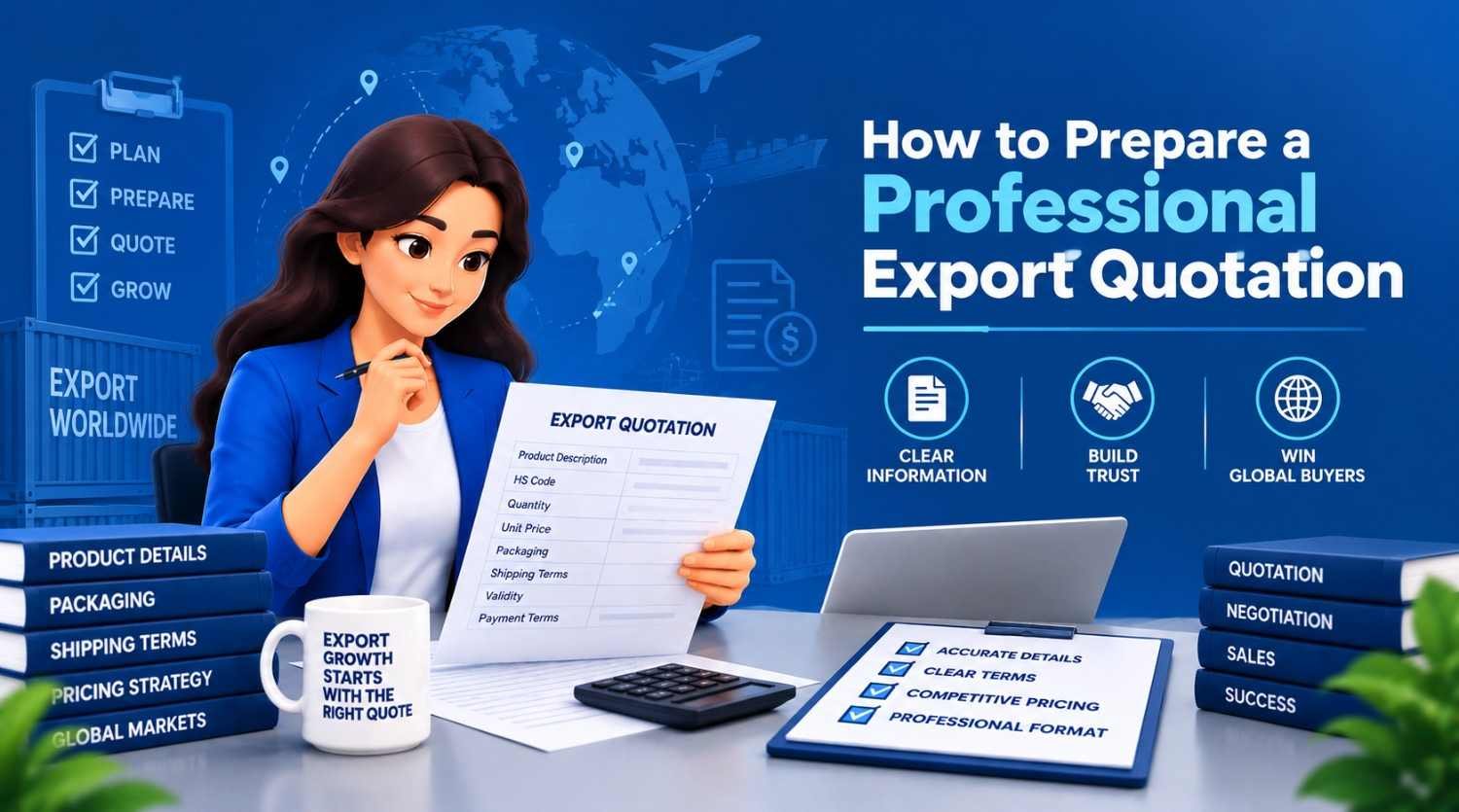
Your quotation should mention product price, currency, quantity, packaging, delivery schedule, payment terms, validity period and agreed trade terms. Avoid unclear pricing or incomplete conditions.
7. Choose Safe Payment Terms
Payment terms should be selected according to the buyer relationship, order value and risk level. New exporters should avoid accepting unclear or unusually risky arrangements. Confirm bank details carefully and maintain proper written communication.
8. Plan Packaging and Logistics
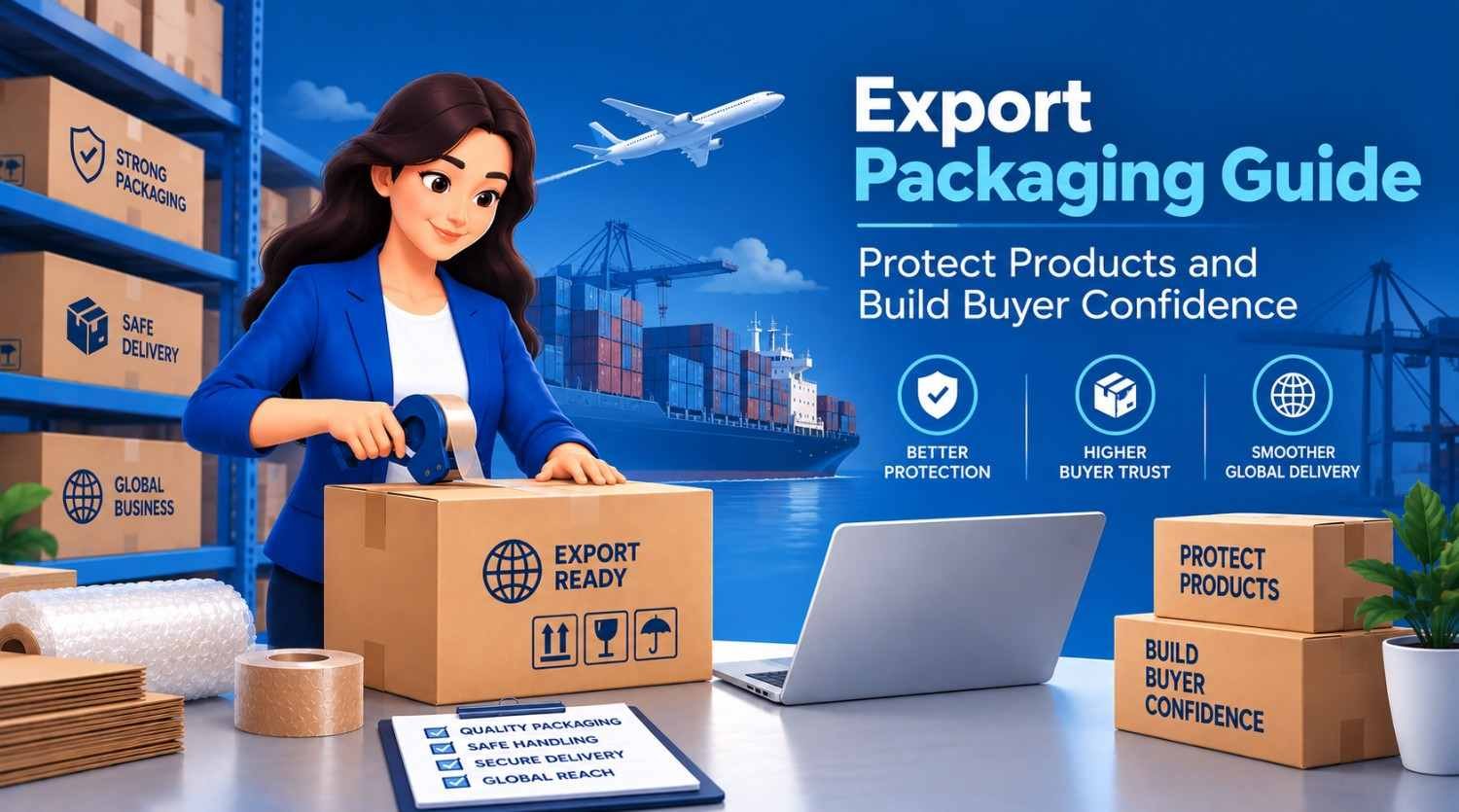
Export packaging should protect the product during handling, storage and international transportation. Select a freight forwarder or logistics partner with experience in your product category and destination country.
9. Maintain Quality and Communication
Consistent quality, honest commitments and regular communication are essential for repeat export orders. Inform the buyer immediately about production progress, inspection, dispatch and any possible delay.
10. Build Long-Term Buyer Relationships
Export success is not only about completing one shipment. Follow up after delivery, request feedback, resolve concerns quickly and continue sharing relevant products and updates.
Conclusion
A strong export business is built through product quality, documentation, buyer trust and reliable delivery. Start with a manageable market, learn from each order and gradually expand your international presence.